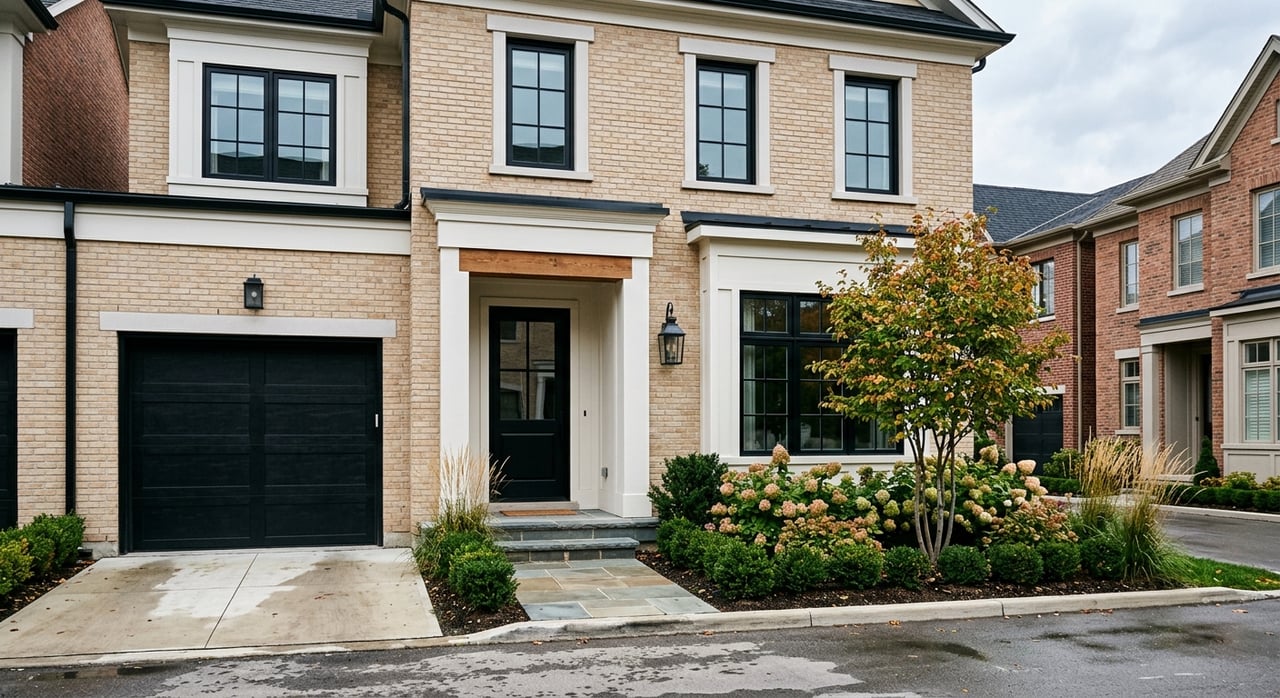
Bergen County Townhome Or Single-Family For Commuters
July 9, 2026
July 9, 2026
Choosing between a townhome and a single-family home in Bergen County is not as simple as picking the lower price. In this market, commuters often find that attached homes can be just as competitive, especially in towns with strong transit access. If you are trying to balance commute time, monthly costs, and day-to-day lifestyle, the right choice comes down to strategy. Let’s dive in.
Bergen County is a high-cost, competitive market. Recent market data shows a countywide median sale price of $787,638, with homes selling at a 104.2% sale-to-list ratio and a median of 63 days on market. The county also has 372,622 housing units, with a 65.3% owner-occupied rate.
For commuters, that means your decision is usually less about finding a “cheap” option and more about choosing the right mix of location, housing type, and monthly carrying costs. In Bergen County, that matters even more because townhomes are not automatically the budget play.
A single-family detached home is a detached structure with one primary residence. A townhouse is generally an attached unit with two common walls and its own ground-level entrance. In some cases, an attached unit can still be classified as single-family if it has separate systems and no units above or below.
For you as a buyer, the bigger issue is not the label. It is how the home lives, what you are responsible for, and how the monthly budget works in real life.
A townhome can reduce some of the exterior or common-area responsibilities that often come with a detached home. That can be appealing if you want a more streamlined ownership experience while keeping commuter access in focus.
But that convenience often comes with HOA dues. Those dues are typically separate from your mortgage payment, and they can range from a few hundred dollars per month to more than $1,000, depending on the community and what is included.
A detached home usually gives you more direct control over exterior upkeep and long-term property decisions. If you want more private outdoor space or fewer association rules, that can be a strong advantage.
The tradeoff is that more of the maintenance burden stays with you. Repairs, exterior upkeep, utilities, taxes, and insurance all need to be part of your planning from day one.
When you compare homes in Bergen County, do not stop at the asking price. Your total monthly housing cost may include principal, interest, property taxes, mortgage insurance, homeowner’s insurance, flood insurance, and HOA fees.
That is especially important for commuters who want to stay flexible and avoid budget strain. A townhome with a manageable exterior workload may still cost more each month than expected once HOA dues are added. A detached home may skip the HOA, but it can bring more repair and maintenance exposure.
Current market snapshots show 161 townhouses for sale across Bergen County with a $947K median listing price. That is notably higher than the broader county median sale price of $787,638.
This tells you something important. In Bergen County, townhomes often compete on commute convenience, low-maintenance appeal, and lifestyle, not just entry price. For many buyers, the real question is where they want to place their money: purchase price, HOA dues, maintenance, or extra space and control.
If your work or routine depends on getting into Manhattan, Hoboken, or nearby job centers efficiently, location can matter as much as floor plan. Three Bergen County towns stand out for different commuter patterns.
Fair Lawn is one of the clearest train-first options in this group. NJ Transit lists both Broadway Station and Radburn Station on the Main-Bergen County Line, and that line also serves Hoboken Terminal, where PATH access is available.
If you want a rail-based commute strategy, Fair Lawn deserves close attention. It can be especially useful if you want easier train access into Hoboken with the option to continue your trip from there.
Fair Lawn is still a competitive market. Recent data shows a $749,551 median sale price, 51 median days on market, and 5 townhouses plus 5 condos for sale last month. Census data also shows a 78.1% owner-occupied rate and a $564,700 median owner-occupied value.
Teaneck is more bus-oriented than rail-oriented. NJ Transit route 167 serves Teaneck stops and runs to Port Authority Bus Terminal, making it a practical option for Manhattan-bound commuters.
This matters if you do not want your routine tied to station parking or a train-centered setup. For some buyers, bus access can make day-to-day commuting simpler.
Teaneck also has more attached-home inventory than many buyers expect. Recent market snapshots show 8 townhouses and 11 condos for sale last month, with a recent $680K median sale price and a $697,246 average home value. Census data shows a 77.5% owner-occupied rate.
Englewood is another strong bus-first option. NJ Transit route 166 includes Englewood stops and runs to Port Authority Bus Terminal, so commute planning here tends to center on bus access rather than rail.
Englewood’s attached-home market is also broad. Recent snapshots show 9 townhouses and 37 condos for sale last month, with a recent $662,603 median sale price across all home types.
One reason Englewood stands out is pricing range. Recent townhome examples span from about $670K to $1.199M, which means buyers may find both more accessible attached options and higher-end inventory depending on their goals.
If you are stuck between a townhome and a detached house, start with your commute and your monthly comfort level. Then work backward into property type.
Here is a simple way to think about it:
If you are considering a townhome, the association matters almost as much as the unit itself. In New Jersey, the Department of Community Affairs oversees programs related to planned real estate developments and provides guidance for owners in common-interest communities, including rights involving financial records, meetings, and dispute resolution.
For you, that means the smart questions go beyond finishes and square footage. You want to know what the dues cover, how the association operates, and how that monthly obligation fits into your budget over time.
In Bergen County, the better choice is not automatically the cheaper-looking one. For commuters, the smarter move is the home that best matches your transit pattern, monthly budget, and comfort with maintenance responsibility.
If you want a train-first strategy, Fair Lawn stands out. If you prefer bus-based commuting into Manhattan, Teaneck and Englewood both deserve a closer look, with different inventory mixes and price ranges.
The key is to compare homes the way you will actually live in them, not just how they appear on paper. If you want a clear, strategy-first plan for buying in Bergen County, MONIQUE BELGRAVE can help you evaluate the tradeoffs and move with confidence.
If you're a first-time buyer seeking guidance, a move up buyer ready for more space, a seller looking to list strategically, an investor focused on returns, or a renter exploring the market, get the insight, strategy, and support you need to move forward with confidence.
Get In Touch With Monique To Learn More
OFFICE 155 6th St, Hoboken, NJ 07030 BROKERAGE 28 Valley Road #1 Montclair, NJ 07042