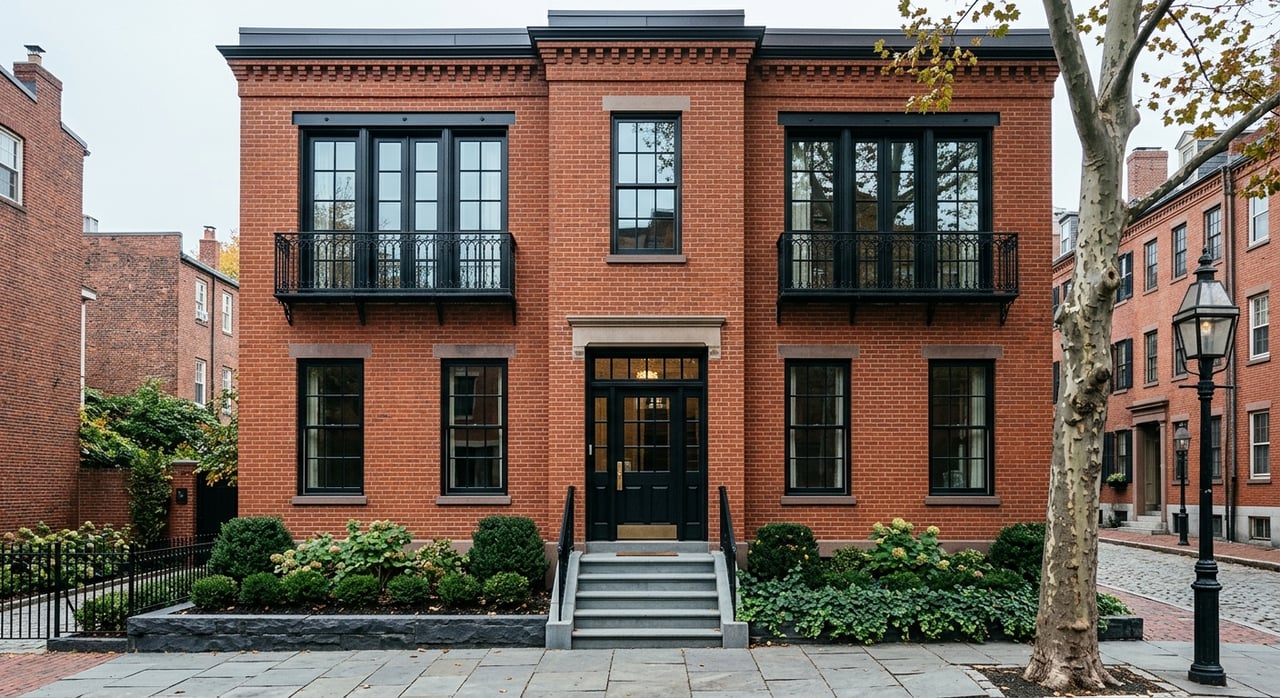
A Smart Start to Hudson County Multifamily Investing
April 23, 2026
April 23, 2026
Thinking about buying a 2-family, 3-family, or 4-family property in Hudson County? You are not alone. For many first-time investors, small multifamily looks like a smart way to enter the market, especially in a renter-heavy area where demand stays strong. The key is knowing that strong rents do not always mean easy cash flow. In Hudson County, taxes, older housing stock, and financing details can make or break your numbers. This guide will help you understand what beginners need to know before making a move. Let’s dive in.
Hudson County is a very different market from many other parts of New Jersey. It is one of the densest counties in the state, with 724,854 residents and 15,691.5 people per square mile according to the U.S. Census. That density supports a large renter population and keeps multifamily housing central to the local market.
The county is also highly renter-oriented. Only 30.7% of occupied housing units are owner-occupied, while the countywide median gross rent is $1,894. In places many buyers first consider, median gross rent is even higher: $2,007 in Jersey City, $2,938 in Hoboken, and $2,500 in Weehawken, based on Census quick facts for Hudson County and its municipalities.
That demand is attractive, but it comes with a cost. New Jersey's 2024 average residential tax data shows Hudson County had an average residential tax bill of $10,065, with even higher averages in Weehawken at $14,988 and Jersey City at $10,624. For a beginner investor, that means your monthly expenses can climb quickly even when rent looks solid on paper.
If you are shopping for your first multifamily property, Hudson County gives you plenty to study because multifamily is a major share of the housing stock. In the county’s 2025-2029 Consolidated Plan, 32.5% of all residential properties are 2-4 unit buildings. By comparison, only 10.9% are detached single-family homes.
That matters because 2-4 unit buildings are not a niche product here. They are a core part of the market, especially in older urban areas like Hoboken, Jersey City, and Weehawken. For beginners, that creates more opportunities to find a property type that fits an entry-level investment strategy.
Unit mix matters too. The same county plan shows that 42.8% of renter units are studio or one-bedroom units, and 38.8% are two-bedroom units. That means a building’s layout, bedroom count, and unit configuration can matter just as much as total square footage when you estimate rent potential.
One of the biggest beginner mistakes is assuming a small multifamily will be fairly simple to maintain. In Hudson County, the age of the housing stock says otherwise. The county’s Consolidated Plan reports that 73.1% of owner-occupied units and 65.3% of renter-occupied units were built before 1980.
Older properties often come with more repair and replacement risk. Roofs, boilers, plumbing, electrical systems, windows, and turnover work can all show up faster than expected. The county also notes lead-based paint risk in older housing, which is another reason to plan for rehab and maintenance with care.
This does not mean older multifamily properties are bad investments. It means you should underwrite them conservatively. A property that looks great based on rent alone can become much less attractive if you under-budget for building systems and reserves.
If you are new to investing, start with two ideas: cap rate and cash flow. Freddie Mac explains that cap rate is a way to convert a property’s expected net operating income into present value. The basic formula is net operating income divided by value.
Cap rate is useful because it helps you compare properties without mixing in the details of your specific loan. Cash flow is different. Cash flow is what is left after operating expenses and debt service are paid.
In Hudson County, beginners should spend just as much time on expenses as on rent. At a minimum, your underwriting should include:
This local market gives you very little room for sloppy assumptions. Taxes are high, and the housing stock is older. If you underestimate either one, your projected return can disappear quickly.
Hudson County does have strong demand fundamentals. The county’s Consolidated Plan reports an owner vacancy rate of 1.7% and a rental vacancy rate of 4.11%. It also states that median home value rose 37.5% from 2013 to 2023, while median contract rent rose 52.3% over the same period.
Those numbers show a market with activity and pricing strength. But they do not guarantee a good investment outcome for every property. Strong rent growth can still be offset by taxes, repairs, insurance, and financing costs.
This is where discipline matters. A beginner should not ask only, “Can I rent these units?” In Hudson County, the better question is, “After all realistic costs, does this property still work?”
For many first-time buyers, house-hacking is the most practical entry point. If you buy a one- to four-family property and live in one of the units as your primary residence, you may be able to access owner-occupant financing options. The HUD FHA handbook states that FHA single-family programs apply to one- to four-family owner-occupied principal residences.
The Consumer Financial Protection Bureau explains that FHA loans can allow down payments as low as 3.5%, though mortgage insurance is required. For a beginner trying to get into Hudson County, that lower entry point can make a big difference.
Loan limits matter too. FHFA’s 2026 county loan limit list shows Hudson County conforming limits of $1,209,750 for one unit, $1,548,975 for two units, $1,872,225 for three units, and $2,326,875 for four units. In a high-cost market, those numbers matter because purchase price can push you into a different financing category faster than you expect.
A pure investment purchase gives you more flexibility because you do not have to live there. You can focus only on the best numbers and the best fit for your strategy. But you may give up some of the financing advantages available to an owner-occupant buyer. For a beginner, that trade-off is worth reviewing carefully before you start touring properties.
Before you move forward on a Hudson County multifamily property, you should be able to answer a few core questions with confidence. These are not advanced investor questions. They are the basics that protect you from buying the wrong deal.
Ask yourself:
If you cannot answer these clearly, you are not ready to bid yet. In this market, a fast decision is fine, but an uninformed one can be expensive.
For most first-time multifamily buyers in Hudson County, the smartest approach is simple. Focus on a small number of neighborhoods, learn the common 2-4 unit building types, and run conservative numbers before you fall in love with the property.
Try to avoid relying on best-case rent or best-case repair assumptions. Instead, build in room for maintenance, taxes, and normal turnover. If the property still works with realistic numbers, you are looking at a much healthier opportunity.
It also helps to know your lane early. If your goal is house-hacking, your search, financing path, and property criteria may look very different from a buyer focused on pure investment returns. Clarity on strategy usually leads to better decisions and fewer wasted tours.
Hudson County can be a compelling place to start with multifamily investing because renter demand is strong and 2-4 unit properties are a meaningful part of the housing stock. At the same time, this is not a market where beginners should rely on rough estimates or overly optimistic projections. High taxes, older buildings, and financing structure all need close attention.
If you are exploring your first multifamily purchase in Hoboken, Jersey City, Weehawken, or the broader Hudson County market, the right guidance can help you move with more clarity and confidence. When you are ready to build a strategy around your budget, goals, and financing options, connect with MONIQUE BELGRAVE.



If you're a first-time buyer seeking guidance, a move up buyer ready for more space, a seller looking to list strategically, an investor focused on returns, or a renter exploring the market, get the insight, strategy, and support you need to move forward with confidence.
Get In Touch With Monique To Learn More

OFFICE 155 6th St, Hoboken, NJ 07030 BROKERAGE 28 Valley Road #1 Montclair, NJ 07042